Developing intelligent battery energy management technology with Vortex
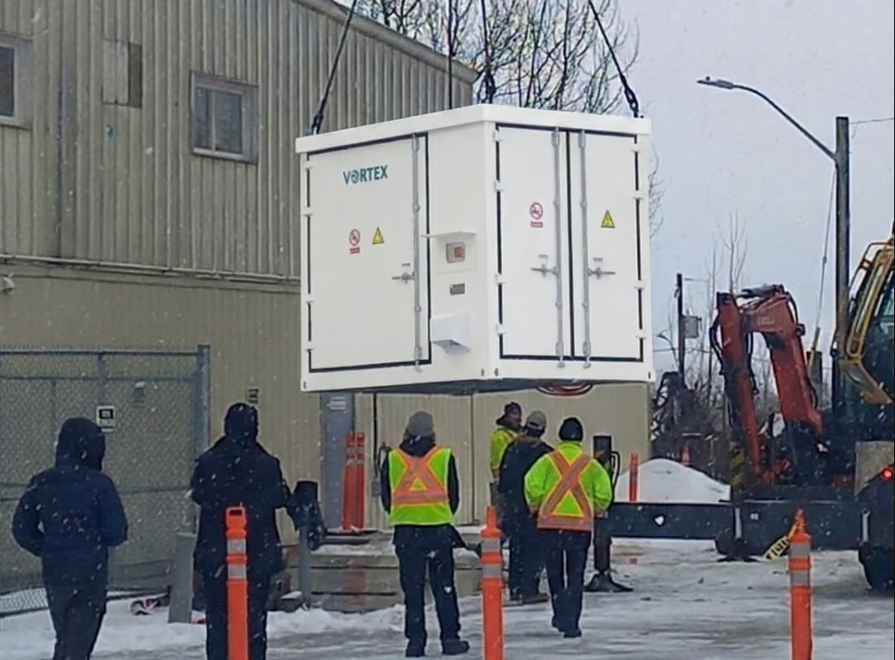
Using real-time battery monitoring and electricity pricing data to automate charging and discharging decisions and improve energy management.
Dushyant Puri, SMART Centre
About the project
Vortex partnered with Conestoga’s SMART Centre to develop an intelligent building management system designed to optimize battery energy storage operations. The project focused on creating an automated controller that uses electricity pricing and battery performance data to determine when batteries should charge, discharge, or remain idle.
The challenge
Managing battery energy storage systems requires balancing electricity costs, battery health, and operational efficiency. Electricity prices fluctuate throughout the day, creating opportunities to reduce energy costs by charging batteries during lower-cost periods and discharging them when prices are higher. The project sought to develop an automated approach that could respond to changing electricity rates while maintaining safe battery operating conditions.
Approach
- Developed a Python-based scheduling system to automate battery charging and discharging decisions
- Integrated time-of-use and step-rate electricity pricing information from a cloud database
- Connected the system to battery monitoring equipment to retrieve real-time charge levels and battery health data
- Developed control logic to determine when batteries should charge, discharge, or remain idle
- Established a minimum battery charge reserve of 20 per cent to prevent excessive discharge
- Implemented communication between the scheduling system and power conversion equipment to transmit charging and discharging instructions
Results
- Developed an automated scheduling script that responds to electricity pricing and battery conditions
- Integrated real-time battery monitoring data with electricity tariff information
- Implemented logic for determining charging, discharging, and idle operations
- Established a minimum charge threshold to help protect battery reserves
- Enabled the scheduling system to send power instructions to battery conversion equipment
- Identified physical controller testing and validation as the next stage of development
Why it matters
- Creates opportunities to reduce electricity costs through more efficient battery charging and discharging
- Supports better use of energy storage systems during periods of fluctuating electricity demand and pricing
- Helps protect battery health through automated operating limits
- Reduces the need for manual intervention in battery energy management
- Establishes a foundation for further development and testing of intelligent energy control systems
Get started with your next project
We acknowledge the support of the Natural Sciences and Engineering Research Council of Canada (NSERC).